Blue Tang
Paracanthurus hepatus
Water Parameters
About
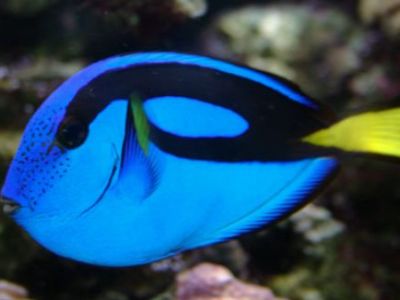
The Blue Tang, popularized worldwide by animated cinema, is one of the most desired marine fish. Its royal blue body with a black palette and yellow tail is unmistakable. Despite its popularity, it is a demanding fish that requires large aquariums and is extremely prone to diseases.
Behavior & Temperament
Active, tireless swimmer that needs plenty of space. Semi‑aggressive with other tangs. Has a sharp caudal spine for defense. May play dead when stressed.
Feeding
Herbivore/Omnivore. In the wild feeds mainly on zooplankton. In aquariums: nori algae, spirulina, marine flakes, mysis, brine shrimp and vegetables. Vegetable-rich diet is essential.
Breeding
Oviparous. Spawns in groups, releasing gametes into the water column. Does not reproduce in home aquariums. Commercial breeding in captivity is recent and limited.
Care Notes
Large aquarium (minimum 400 L). Requires excellent water quality. Vegetable‑rich diet (nori, spirulina) to prevent head and lateral line erosion. Prone to ich – quarantine mandatory. Ample swimming space.
Compatibility
Compatible with most reef fish of similar size. Can be aggressive toward other tangs, especially those with similar coloration. Introduce last. Needs plenty of swimming room.
Quick Summary
| Scientific Name | Paracanthurus hepatus |
|---|---|
| Family | Acanthuridae |
| Category | Fish |
| Care Level | Advanced |
| Water Type | Freshwater |
| Max Size | 30.0 cm (11.8") |
| Min Tank | 400 L (106 gal) |
| Min Group | 1+ |
| Diet | Herbivore/Omnivore. In the wild feeds mainly on zooplankton. In aquariums: nori algae, spirulina, marine flakes, mysis, brine shrimp and vegetables. Vegetable-rich diet is essential. |
| Temperament | Active, tireless swimmer that needs plenty of space. Semi‑aggressive with other tangs. Has a sharp caudal spine for defense. May play dead when stressed. |
Track this species in your aquarium
Create a free account to add Blue Tang to your tank and get personalized care tips.
Create Free Account